📖 5 min read
The AARRR framework, often called "Pirate Metrics" due to its acronym, represents a critical lens through which businesses can analyze and improve their customer lifecycle. This model dissects the user journey into five key stages: Acquisition, Activation, Retention, Revenue, and Referral. Understanding and optimizing each stage is essential for sustainable growth, especially in today's competitive digital landscape. By meticulously tracking and analyzing metrics related to each stage, businesses can identify bottlenecks, refine their strategies, and ultimately drive higher conversion rates and increased customer lifetime value. This guide provides a comprehensive overview of the AARRR framework and offers practical steps for its effective implementation, focusing on leveraging automated funnel optimization, CRM pipelines, and conversion rate AI to maximize impact.
1. Understanding the AARRR Framework
The AARRR framework provides a structured approach to understanding and improving your customer funnel. It's a simple yet powerful way to categorize and prioritize your marketing and sales efforts. Each stage represents a crucial step in the customer journey, and by focusing on improving each stage, you can significantly increase your overall business growth. The framework is not a one-size-fits-all solution, and it's important to tailor it to your specific business model and customer base.
Let's delve deeper into each of the five stages:
- Acquisition: This is where you attract potential customers to your product or service. Metrics include website traffic, ad impressions, social media followers, and cost per acquisition (CPA). For example, a SaaS company might track the number of leads generated from LinkedIn ads or the organic search traffic to their blog. Effective acquisition strategies involve targeted advertising, content marketing, and SEO optimization to attract the right audience.
- Activation: This is when a new user experiences the value of your product for the first time. It could be signing up for a free trial, completing a key task, or reaching a specific milestone. Metrics include the percentage of users who complete onboarding, the time it takes to achieve activation, and the number of active users. For example, a productivity app might measure the percentage of new users who create their first project within the first week. A smooth and intuitive user experience is crucial for driving activation.
- Retention: This is the stage where you keep customers coming back to your product. Metrics include churn rate, customer lifetime value (CLTV), and repeat purchase rate. For example, an e-commerce store might track the percentage of customers who make a second purchase within a month. Strategies for improving retention include personalized communication, loyalty programs, and continuous product improvements.
- Revenue: This is when customers start paying for your product or service. Metrics include average revenue per user (ARPU), conversion rate from free trial to paid subscription, and total revenue. For example, a subscription-based service might track the ARPU for different customer segments. Optimizing pricing strategies, offering different subscription tiers, and providing excellent customer support are key to maximizing revenue.
- Referral: This is when satisfied customers recommend your product to others. Metrics include referral rate, Net Promoter Score (NPS), and the number of new customers acquired through referrals. For example, a social media platform might track the number of users who invite their friends to join. Implementing referral programs, encouraging user reviews, and providing exceptional customer service can significantly boost referrals.
Understanding the nuances of each stage within the AARRR framework enables businesses to pinpoint areas for improvement and allocate resources effectively. By tracking relevant metrics and implementing targeted strategies, companies can optimize their customer funnel and drive sustainable growth. Each stage is interconnected, and improvements in one area can often positively impact other stages. For instance, a streamlined onboarding process (activation) can lead to higher retention rates and increased revenue.
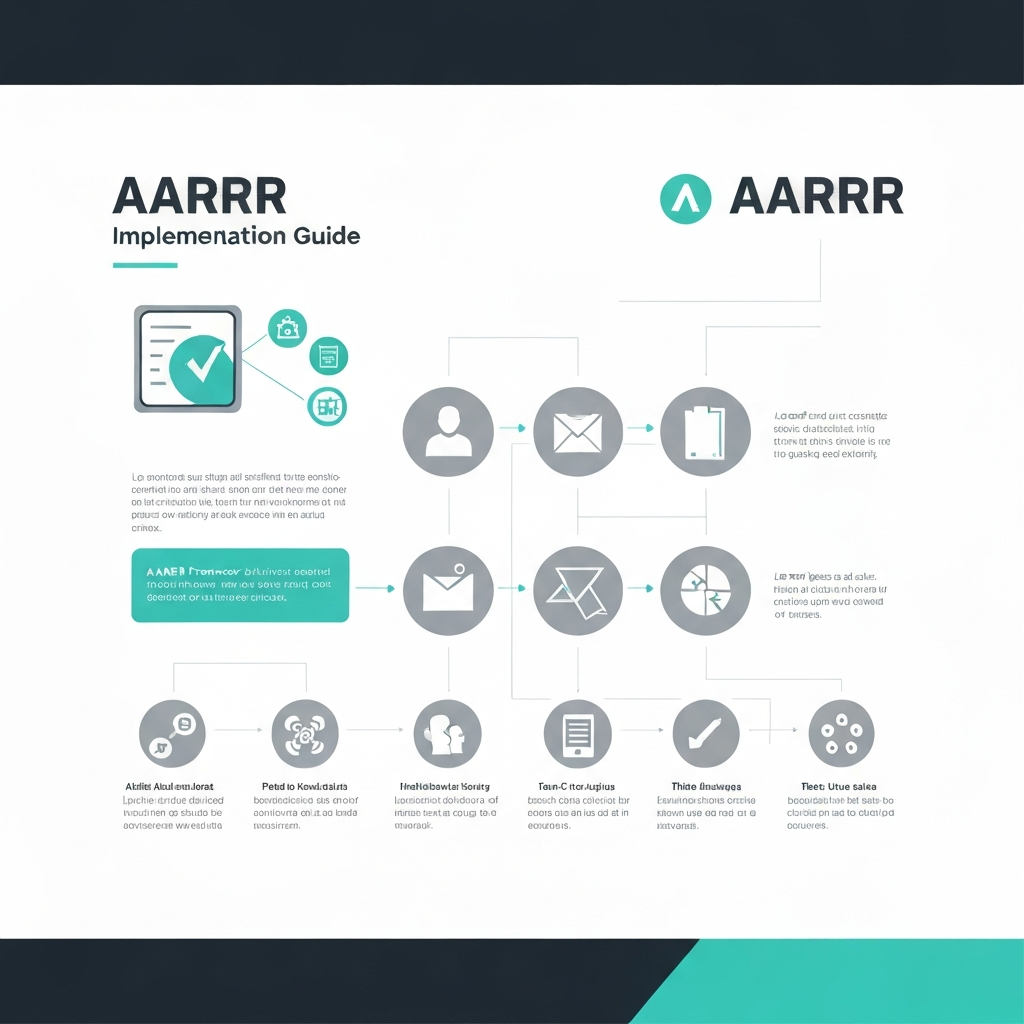
2. Implementing the AARRR Framework with Automated Funnel Optimization
Successfully implementing the AARRR framework requires a data-driven approach and the right tools. Automated funnel optimization platforms can play a crucial role in streamlining the process and maximizing the impact of your efforts. These platforms leverage AI and machine learning to analyze customer behavior, identify patterns, and recommend strategies for improvement.
- Data Collection and Integration: The first step is to collect data from various sources, including your website, CRM, marketing automation platform, and analytics tools. Integrate all these data sources into a central dashboard to get a unified view of your customer funnel. Automated funnel optimization platforms can help you automate this process, ensuring that you have accurate and up-to-date data at your fingertips. This single source of truth will provide a foundation for informed decision-making and effective optimization.
- Funnel Analysis and Bottleneck Identification: Once you have your data in place, you can use the AARRR framework to analyze your customer funnel and identify bottlenecks. Automated funnel optimization platforms can help you visualize your funnel, track key metrics at each stage, and identify areas where users are dropping off. For example, you might discover that a significant number of users are abandoning the signup process due to a complicated form. This insight allows you to focus your efforts on addressing the specific issues that are hindering your growth.
- A/B Testing and Experimentation: After identifying bottlenecks, the next step is to run A/B tests and experiments to find ways to improve your funnel. Automated funnel optimization platforms can help you design and implement A/B tests, track the results, and identify winning variations. For example, you might test different versions of your landing page headline or different call-to-action buttons. By continuously experimenting and iterating, you can optimize your funnel for maximum conversion rates.
3. Leveraging Algorithmic Pricing for Increased Revenue
Algorithmic pricing can dramatically improve revenue within the AARRR framework by optimizing pricing strategies to maximize conversion rates and average revenue per user.
Algorithmic pricing, also known as dynamic pricing, uses data analytics and machine learning to set prices based on real-time market conditions, customer behavior, and competitor pricing. This approach goes beyond simple cost-plus pricing and takes into account factors such as demand, seasonality, and customer value. By implementing algorithmic pricing, businesses can optimize their revenue within the AARRR framework and improve their overall profitability.
To effectively implement algorithmic pricing, start by collecting and analyzing data on customer behavior, market trends, and competitor pricing. This data can be used to build a predictive model that forecasts demand and determines the optimal price for each product or service. Consider using a pricing optimization platform that can automate the process and provide real-time pricing recommendations. These platforms often integrate with existing e-commerce or CRM systems, making it easier to implement and manage algorithmic pricing strategies. Remember to monitor the results closely and adjust your pricing algorithms as needed to ensure that you are maximizing revenue while maintaining customer satisfaction.
Algorithmic pricing can significantly improve revenue by optimizing pricing strategies at various stages of the AARRR framework. For example, during the acquisition stage, you can use algorithmic pricing to offer discounts or promotions to attract new customers. During the retention stage, you can use personalized pricing to reward loyal customers and encourage them to make repeat purchases. By tailoring your pricing strategies to each stage of the customer journey, you can maximize conversion rates, increase average revenue per user, and drive sustainable business growth. The key is to find the right balance between maximizing profit and providing value to your customers.
🔥 Want to dive deeper?
Explore our other in-depth guides and expert analyses on related topics!
Conclusion
The AARRR framework offers a structured and data-driven approach to optimizing your customer funnel and driving sustainable business growth. By focusing on each stage of the customer journey – Acquisition, Activation, Retention, Revenue, and Referral – you can identify bottlenecks, refine your strategies, and maximize your overall profitability. Implementing the AARRR framework effectively requires a combination of data analytics, automation, and a customer-centric mindset. By leveraging automated funnel optimization platforms and algorithmic pricing strategies, businesses can unlock significant growth opportunities.
As the digital landscape continues to evolve, the importance of understanding and optimizing the customer journey will only increase. Future trends in AARRR framework implementation will likely involve even greater use of AI and machine learning to personalize customer experiences and predict customer behavior. By staying ahead of the curve and continuously adapting your strategies, you can ensure that your business remains competitive and achieves long-term success.
❓ Frequently Asked Questions (FAQ)
What are the key benefits of using the AARRR framework?
The AARRR framework provides a structured way to understand and optimize your customer acquisition and retention strategies. By breaking down the customer journey into five key stages, it allows you to identify bottlenecks and focus your efforts on the areas that will have the biggest impact on your business. This leads to improved conversion rates, increased customer lifetime value, and ultimately, sustainable business growth. For example, identifying a high churn rate after the free trial period might prompt a company to improve its onboarding process or offer more personalized support.
How can I measure the success of my AARRR framework implementation?
The success of your AARRR framework implementation can be measured by tracking key metrics at each stage of the funnel. For acquisition, track website traffic, lead generation, and cost per acquisition. For activation, monitor the percentage of users who complete onboarding and the time it takes for them to experience the core value of your product. Retention can be measured by churn rate and customer lifetime value. Revenue is tracked through metrics like average revenue per user (ARPU) and total revenue. Finally, referral success is indicated by referral rates and Net Promoter Score (NPS). Regularly monitor these metrics to identify areas for improvement and track the impact of your optimization efforts.
What are some common mistakes to avoid when implementing the AARRR framework?
One common mistake is failing to define clear metrics for each stage of the funnel. Without specific metrics, it's difficult to track progress and identify areas for improvement. Another mistake is focusing too much on one stage of the funnel while neglecting others. It's important to take a holistic approach and optimize all five stages to achieve sustainable growth. Additionally, avoid making assumptions about customer behavior. Always rely on data and A/B testing to validate your hypotheses and make informed decisions. Finally, neglecting to iterate and adapt your strategies based on data insights can limit the effectiveness of your AARRR framework implementation.
🌐 Global Summary (AI Translation)
🇰🇷 한국어 요약
AARRR 프레임워크는 고객 여정을 이해하고 최적화하는 데 유용한 모델입니다. 이 가이드는 AARRR 프레임워크를 활용하여 데이터 기반 의사 결정과 최적화된 고객 경험을 통해 지속 가능한 비즈니스 성장을 이끄는 상세한 구현 전략을 제공합니다. 자동화된 퍼널 최적화, CRM 파이프라인, 전환율 AI에 중점을 두어 효과를 극대화합니다.
🇯🇵 日本語要約
AARRRフレームワークは、顧客の旅を理解し、最適化するための強力なモデルです。このガイドでは、データに基づいた意思決定と最適化された顧客体験を通じて、持続可能なビジネス成長を推進するためにAARRRフレームワークを活用するための詳細な実装戦略を提供します。自動化されたファネル最適化、CRMパイプライン、コンバージョン率AIに焦点を当てて、効果を最大化します。
🇨🇳 中文摘要
AARRR框架是一个用于理解和优化客户旅程的强大模型。本指南提供了实施AARRR框架的详细策略,通过数据驱动的决策和优化的客户体验来推动可持续的业务增长。重点关注自动化漏斗优化、CRM管道和转化率AI,以实现效果最大化。
Tags: #AARRR #PirateMetrics #FunnelOptimization #GrowthHacking #CustomerJourney #DataAnalytics #AlgorithmicPricing